

What is the value in BECx?
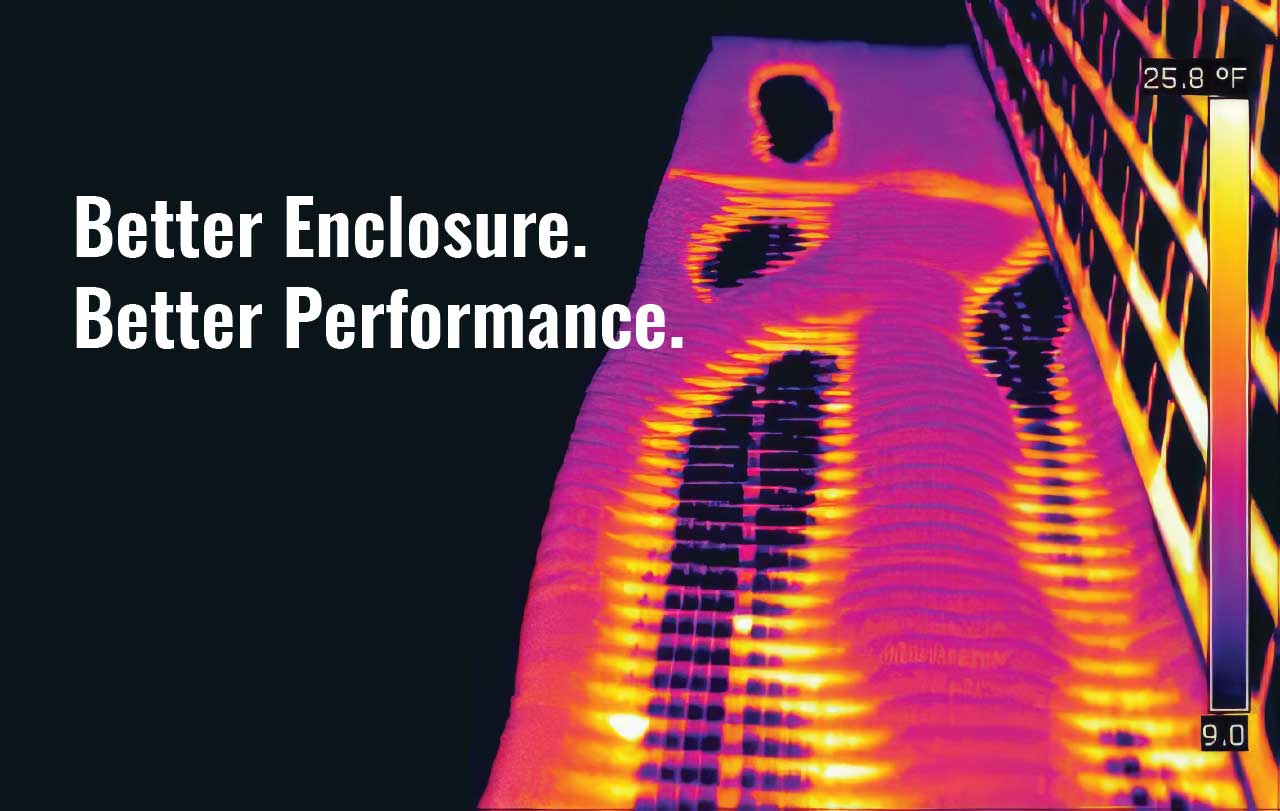
Small enclosure details can significantly affect a building’s performance over its lifespan. Building Enclosure Commissioning (BECx) is a comprehensive process that eliminates costly mistakes during design and construction. By reviewing enclosure systems early and verifying construction in the field, NWESI helps identify issues before they become expensive repairs or, worse, long-term performance problems.

Protect Your Investment with BECx
Catch Problems Early
BECx helps catch enclosure issues before they become costly on-site repairs. By identifying risks like air leakage, water intrusion, condensation, and thermal bridging early, BECx helps reduce maintenance costs and protect long-term building performance.
Enhance Energy Performance
A continuous thermal and air barrier reduces unwanted heat transfer and uncontrolled air leakage, helping lower heating and cooling loads and supporting long-term energy savings.
Improve Ventilation Control
Outdoor air should enter a building through the ventilation system, not through unintended gaps in the enclosure. A tighter, better-performing envelope helps HVAC systems maintain building pressure, ventilation, temperature, and humidity more effectively.
Support LEED Certification
BECx can help support LEED certification goals. LEED v5 BD+C includes a 1-point Enhanced Commissioning path specifically for building enclosure commissioning.
What Does BECx Catch?
Small enclosure details can significantly affect building performance. BECx provides an additional layer of technical review focused on how enclosure components work together.
Common issues include:
- Gaps or discontinuities in air and moisture barrier
- Thermal bridges at structural elements
- Insulation discontinuities
- Flashing details
- Window, door, or curtain wall installation
- Roof-to-wall, wall-to-foundation, and other critical transitions
- Improperly detailed penetrations
- Material compatibility
- Constructability issues between assemblies
- Installation that differs from approved details or submittals
- Air or water leakage identified through field testing
Expert Guidance for Better Building Performance
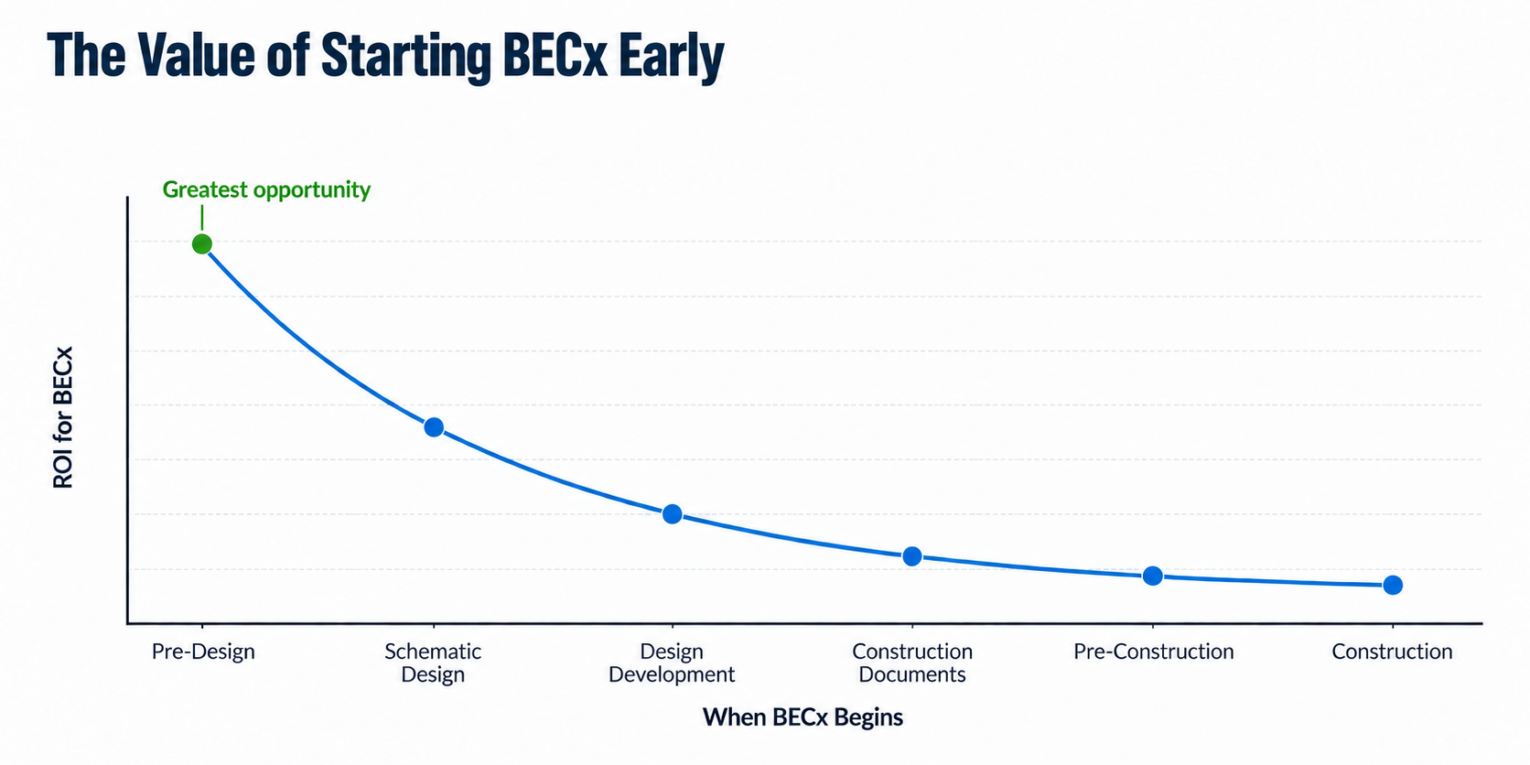
BECx begins long before construction for the best return on investment. Depending on project needs, NWESI can provide:
- Formal design review at several stages during design
- Material & assembly consulting
- Hygrothermal analysis of assemblies
- Thermal bridging review
- Submittal & mockup review
- Construction observation
- Performance testing & verification of air barriers
- Moisture penetration testing
- Issue tracking & resolution
A More Comprehensive ASHRAE 90.1 Enclosure Review
Building enclosure energy-code compliance can be elusive and COMcheck is simply an easy method of showing baseline compliance. To ensure a new building or renovation exceeds the baseline and achieves a higher standard, BECx is the tool to use.
NWESI will perform a detailed design review of the building enclosure information on the project documents by using ASHRAE 90.1 section 5 and several other tools as a guide for showing compliance. Our design review methods come from experience in the industry and witnessing firsthand where common problems arise.
Our goal is to identify issues as early as possible, coordinate corrections with the project team, and reduce the risk of constructing something that becomes a problem later. Once an issue is discovered after it’s been built, that issue becomes much more costly to correct. Particularly if the issue has been repeated several times throughout the building.
When Should BECx Start?
BECx provides the greatest value when it begins during design and continues through construction and closeout.
Why NWESI?
Local Expertise
Our team understands the regional climate, construction practices, and building performance challenges that affect projects throughout the Pacific Northwest and Intermountain West.
Building Systems Experience
Our experience goes beyond the enclosure. With backgrounds in MEP design, TAB, and commissioning, we understand how the building envelope interacts with HVAC systems, ventilation, pressure, comfort, and energy performance.
A Whole-Building Perspective
BECx issues rarely exist in isolation. Our multidisciplinary experience helps us identify coordination gaps between the enclosure and building systems, giving owners a more complete view of performance and potential risk.
Build It Right the First Time
Once the enclosure is covered, problems become harder to find and more disruptive to correct.
NWESI provides independent building enclosure expertise throughout design and construction to help your team deliver a building that performs as intended from day one.